
I’ve been thinking about wallets a lot lately.
NFC smart cards are reshaping how people think about custody.
Whoa!
At first glance the idea of a contactless hardware card seemed like a gimmick, but after trying a few devices and watching real users fumble with seed phrases I began to see how the form factor actually solves practical problems while shifting certain risks in predictable ways that matter.
My instinct said something felt off about narratively perfect solutions.
Okay, so check this out—security isn’t one thing.
There is device security, protocol security, and user security, and they all interact badly sometimes.
Really?
For example, hardware wallets that live behind a screen assume a level of patience and technical literacy that many everyday users do not have, which is why contactless cards that behave more like a bank card can reduce human error even though they introduce NFC-related attack surfaces that need mitigation.
I’m biased, but practicality often beats theoretical perfection when adoption matters.
Contactless signing changes the UX dramatically.
Tap to sign feels simple and familiar to millions who already use tap-to-pay.
Hmm…
That convenience, however, depends on the integrity of the NFC channel and the card’s secure element design, so a good card isolates private keys, performs signing internally, and exposes only tightly scoped responses to the reader, which reduces attack vectors compared with moving keys into a mobile app or cloud service.
There’s a trade-off here—convenience versus additional surface area—and it isn’t trivial.
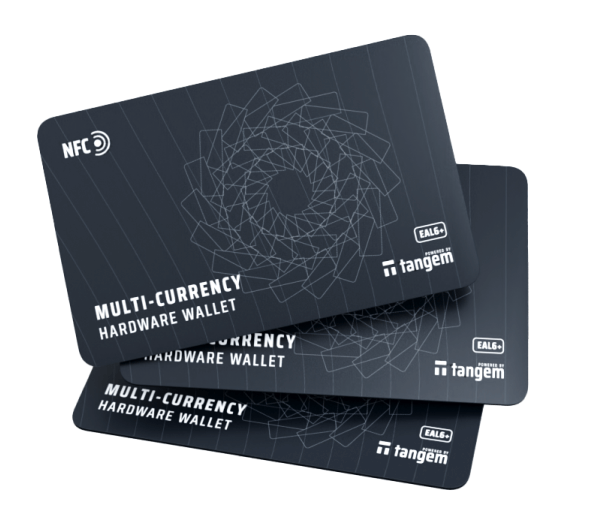
Where Tangem-style Cards Fit In
I like how tangem approached the problem with a smart-card-first philosophy and minimal user friction; the physical card is the security perimeter and the UI is the mobile device that never sees the private key. tangem
Wow!
Designing for the lowest common denominator user means avoiding seed phrases when possible, and instead using a tamper-resistant element that isolates signing and resists cloning.
On one hand it’s elegant; on the other, it concentrates trust in hardware manufacturing and supply-chain integrity which are non-trivial concerns.
I’m not 100% sure any single approach is perfect, but the balance here is practical and sensible for many use cases.
Threat modeling is where most people trip up.
Ask who might target your wallet and why, and then map that to realistic attacker capabilities.
Seriously?
An attacker with physical access to a cheap card will behave differently than a remote attacker trying to phish a user, and defenses should be proportional to the threat—tamper-evidence, hardware attestation, and strong key isolation matter far more for custodial risk than perfect but unusable cryptography.
Also—backup strategies matter a lot and they are often the weakest link.
Backup strategy options for contactless cards include secure single-location storage, multisig with multiple cards, or hybrid approaches that mix air-gapped hardware and mnemonic backups.
Each has cost and cognitive burden trade-offs, and every choice introduces new failure modes.
Whoa!
For high-value holders multisig using independent contactless devices can be shockingly resilient because it avoids any single point of failure while keeping daily-use friction low, though coordination and recovery plans become more complex.
People underestimate recovery planning until they need it.
On the technical side, NFC itself is not magical invulnerability.
Proximity requirements help, but relay attacks and rogue readers are documented risks that need mitigations in both hardware and software layers.
Wow!
Good cards implement user confirmation flows, limited transaction previews, and transaction digest checks performed inside the secure element so that what the device signs is the thing the user believes they’re signing.
Those checks, combined with attestation and verifiable manufacturing provenance, reduce many remote and local attack classes to impracticality.
Regulatory and banking analogies are useful sometimes.
Think of a contactless crypto card as a bank card with a much higher-value bearer instrument attached.
Hmm…
That means practices like cold storage, insurance, access controls, and physical security still apply—tossing money into a fancy card and hoping for the best is not a plan.
Be realistic about the ecosystem around your device.
Adoption will hinge on two things: trust and usability.
Trust requires transparent attestation and open security practices as well as supply-chain assurances, while usability needs simple flows and human-friendly recovery.
Really?
Cards that try to be everything—multi-chain, fully programmable, and visually stunning—often compromise one of those pillars, so watch for trade-offs and prioritize what matters for your users or your own needs.
This part bugs me when vendors overpromise.
FAQ
Are NFC cards safe from remote hacks?
They can be, when built with a secure element that never exposes private keys, when the signing logic verifies transaction details internally, and when manufacturers provide attestation; however, no system is immune and physical access and supply-chain attacks remain concerns.
How should I back up a contactless wallet?
Use a combination of strategies proportionate to your holdings: multisig with independent devices for high-value storage, secure physical storage for spare cards, and a written recovery plan held in a trusted location—avoid storing seeds in cloud services.
Does a card replace a hardware wallet like a Ledger or Trezor?
Not exactly—each form factor has strengths; contactless cards excel in ease-of-use and daily interactions while traditional hardware wallets provide rich UI confirmation and developer ecosystems, so choose based on threat model and user skill level.

